

Scoop
Ernesto de Sousa: Projets et Images
Ernesto de Sousa was a Portuguese multidisciplinary artist, curator, critic and essayist whose work played a key role in the development of experimental and avant-garde art in Portugal. A strong advocate of free and participatory artistic expression, his work encompassed film, theatre, photography, visual arts, and performance. During the 1960s, he became closely connected to the Fluxus movement and European neo-avant-gardes, forming friendships with artists such as Robert Filliou and Wolf Vostell. These encounters profoundly influenced his conception of art as an experimental and participatory ‘open work’. Ernesto de Sousa was also an important figure in the Portuguese ‘Novo Cinema’ movement, founding film clubs and supporting experimental cinema.
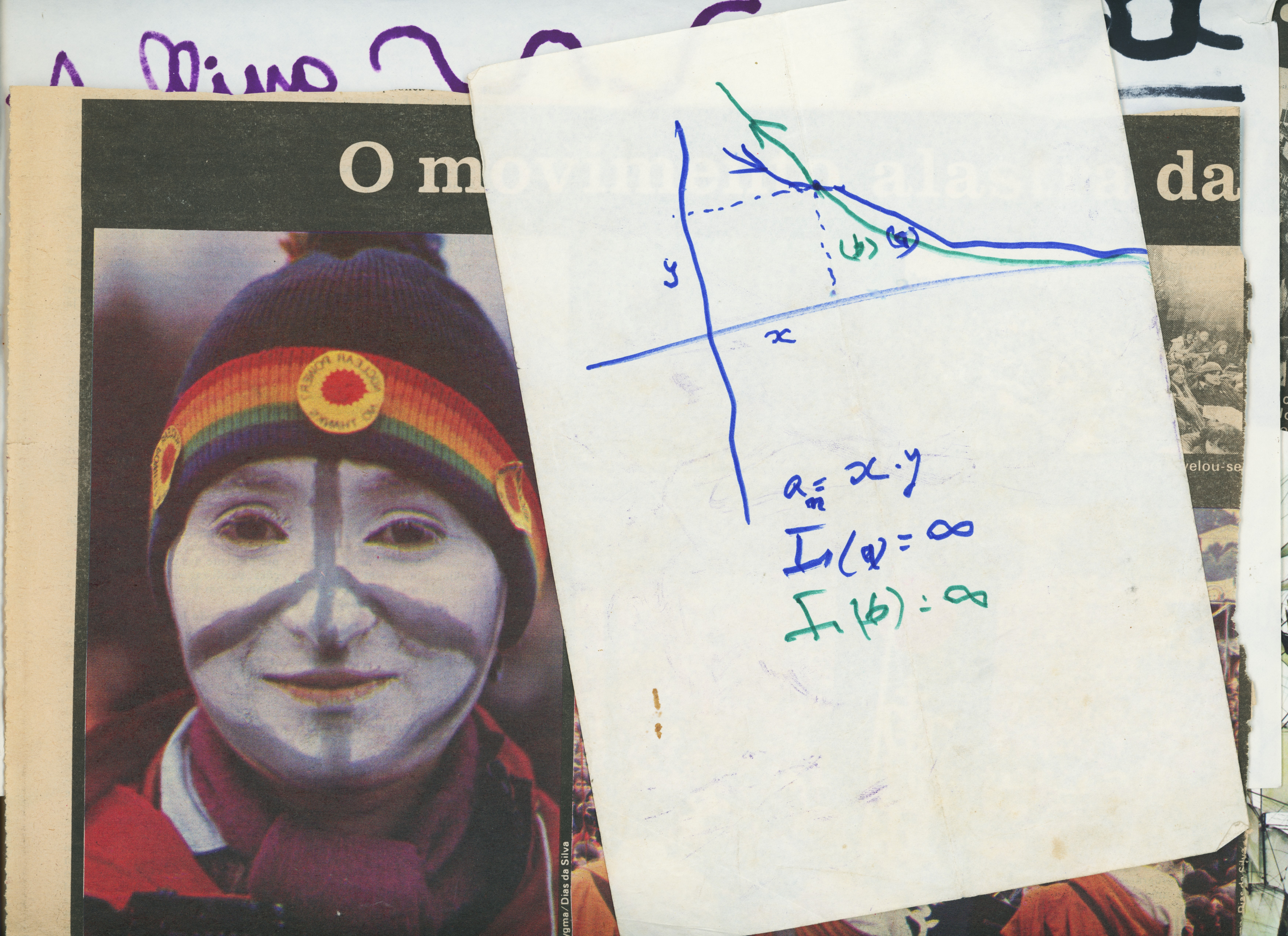
Ernesto de Sousa, Projets, 1960–1988 © Ernesto de Sousa Estate, Ernesto de Sousa Multidisciplinary Studies Centre (CEMES)
His film Dom Roberto (1962) received two awards at the 1963 Cannes Film Festival. In 1977, he organised the exhibition ‘Alternativa Zero’, a landmark presentation of Portuguese avant- ‑garde art that brought emerging practices in Portugal into dialogue with international artistic movements. He subsequently curated the Portuguese representation at the Venice Biennale in 1980, 1982 and 1984.
Photography, which he had practised since the 1940s, remained central to his work, and included ethnographic research, political critique, and the observation of public space and everyday life. He used photographic and found images not simply as documents, but as elements to be rearranged, recontextualised, and exchanged. As Ariella Aïsha Azoulay writes in The Civil Contract of Photography (2008), a photograph is not an object to be passively consumed, but something situated between photographer, subject, and spectator, in which ‘the spectator is called to take part’. Attentive to this relational nature of images, Ernesto de Sousa created numerous slide-projection installations, transforming photographic sequences into dynamic visual environments and spaces of transmission, a practice he also used with his students.
In analogue form, the following pages offer an insight into Ernesto de Sousa’s visual world. The left-hand pages feature a selection of his ‘Projets’ (1960-1988): a glimpse into the large folders in his archive, opened here for the first time for public inspection. They contain ephemeral materials, notes, graphic-design elements and fragments collected over decades, some of which were later put into circulation in his collages, correspondence and artworks. The right-hand pages feature an arrangement of images from his photographic archive and visual diary (‘Images’, 1964-1984).
Together, these materials reflect Ernesto de Sousa’s sustained interest in both the body and language as two sides of the same coin. The banality or humour of his subjects often reflect political concerns, bringing theory and poetry, document and living image into confrontation. His friendships account for an important part of the accumulation of material gathered here.
As the curator and art historian Lilou Vidal has written, ‘to examine the entirety of Ernesto de Sousa’s colossal body of work is to accept a feeling of incompleteness.’ The title of these pages, ‘Projets et Images’ – in French, the language in which Ernesto de Sousa used to write most of his notes –, remains close to this feeling. If, in 2026, many aspects of modern life could be said to fall under the term ‘project’, for Ernesto de Sousa the word held particular significance. For him, art was not a path leading to a finished product, but a social project and an impulse to remain in movement and action.
Placed in dialogue, these ‘Projets et Images’, selected with the help of Isabel Alves, who manages Ernesto de Sousa’s legacy, open onto the ‘third space’ imagined and inhabited by Ernesto de Sousa. Images are vibrant elements that go beyond simply reflecting life; they help us move through it. By making his process visible, this sequence reminds us that an archive is not a repository of conclusions, but a place where materials and ideas carry the energy of those who inhabit it.
Read this article in Issue 34 - Autumn 2026


Other articles of this edition


Share article